
So let’s talk about how we actually did it.
The story begins with Aamina receiving a message from a potential client who wanted to work with us, sending us a message saying there is an organization that needs help making a documentary.
She was looking for someone who could work within a really tight deadline. At first, we were apprehensive about it.
Tight deadlines are usually a red flag, and we don’t like to promise something if we can’t deliver it. But in this case, the person recommending was trustworthy, and we knew she wouldn’t send us a red flag type person.
So we discussed it and decided to hear it out before we made a choice.
Aamina usually handles the client discussions until we are ready to go into pre-production. So she had the over-the-phone meeting with Praveena Joseph De Saram, the managing director of the foundation.
Praveena was very nice and we felt like she was legit, had realistic expectations and genuinely interested in a partnership.
She informed Aamina that they had a fundraising art sale that was the biggest fundraiser for the foundation. She was thinking about having a short 3-minute documentary that she could air during the fundraiser, and also maybe use this later for other grant applications and so on.
Now, to make a 3-minute documentary would be a bit difficult artistically. So we advised that, from an artistic perspective, it would be much more useful as an asset to have a longer documentary, say about 5-7.5 minutes long.
That can be used for the website, for training and screenings later, over and over. Praveena agreed. So we decided, let’s make this work. But then came the constraints…
The problem with this production was that we just had 10 days left before the art sale. And when we finally got a day scheduled to visit the foundation, there were only 7 days left.
The worst part was that Praveena herself was in the US, and she would only land in Sri Lanka 2 days before the event.
Considering the tight timeframe, we created a pitch idea for how we think the documentary should go.
We drafted a storyline and what kind of questions we would like to ask the interviewees, and had some ideas for b-roll pre-planned.
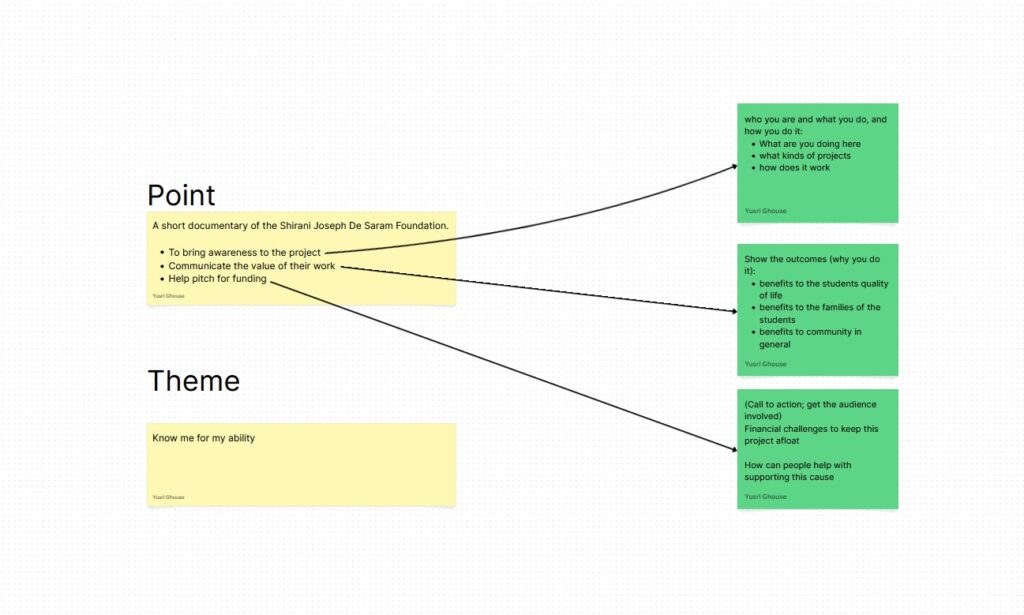
We can’t plan for everything, but a plan always helps things go much more smoothly, so we try our best to plan as much as possible in advance.
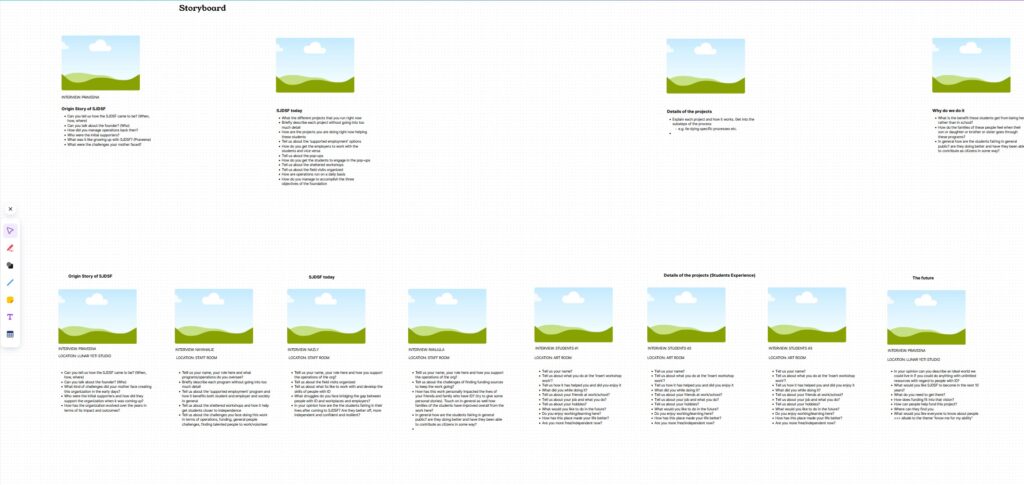
We agreed with their team to film on-site about 1 week out from the event. This will help us cover 3 staff and 3 students + b-roll.
That was on a Friday, then we planned to do a quick edit and work on what we had until the following Wednesday for Praveena, which we scheduled for late evening, 6 pm, because she landed that same day morning. Thursday would be a long and tough edit day so we could deliver by Friday.
Praveena liked our plan, and we crossed our fingers and hoped for the best.
When the day came, we packed up all our gear and drove up to their foundation. It was a Friday, and we had planned to film 3 of the key staff as well as 3 of the students there who had ID.
The plan was to film the students first and then the staff, because the students had to leave by 1 pm and we arrived there at 9 am.
But last minute, we found the staff had to go early for some art gallery prep work, so we had to work double time to get it done. By some miracle, we finished faster than we expected.
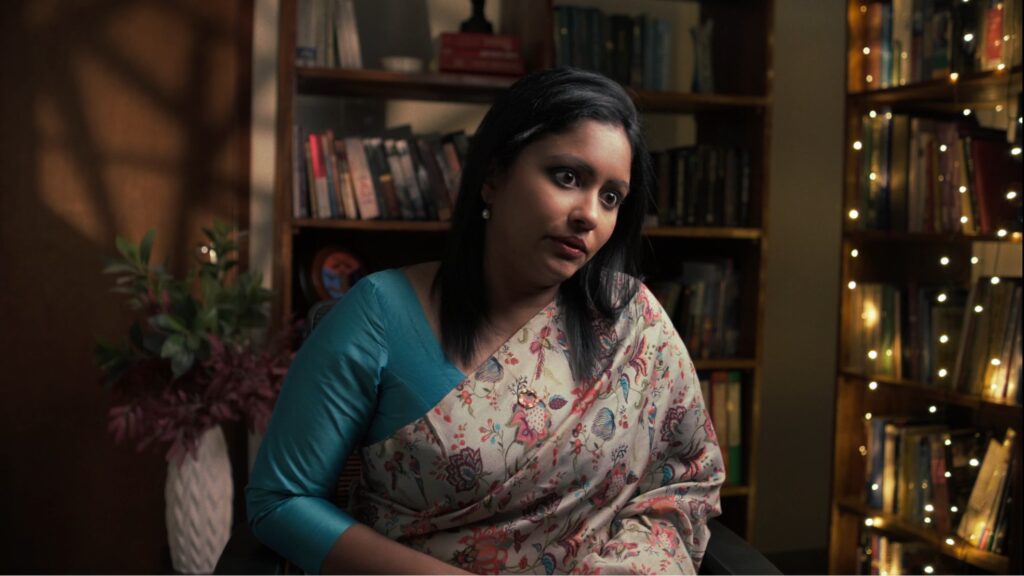
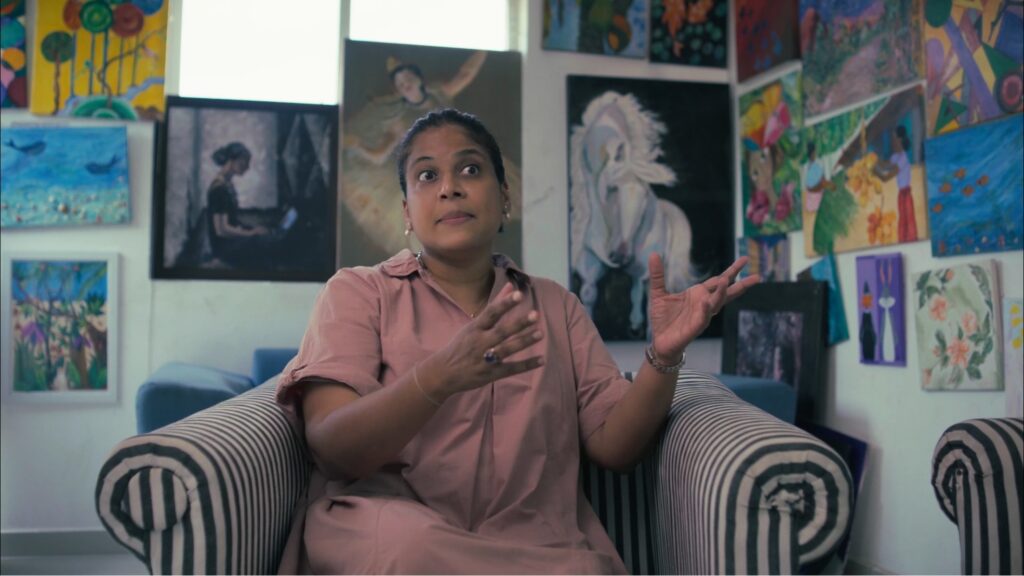
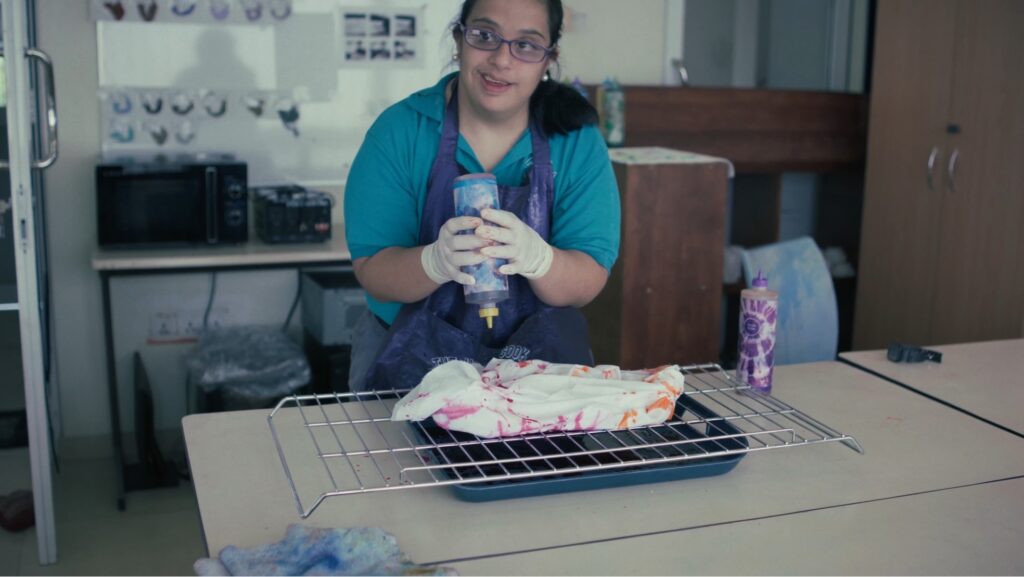
We thought it might take till 5 pm or 6 pm, but somehow we finished all the interviews by 12.30 pm and all the b-roll shots by 2.30 pm.
The following 2 days, we worked on creating the first draft of the edit. We didn’t yet have Praveena’s cut, but we knew we could work with everything else as per our pre-production plan.
So that’s what we did, and we wanted to send Praveena a rough draft so she could give us any feedback because we couldn’t make many revisions after delivery for this project due to the tight deadline.
Praveena loved it; she did have notes, but she was happy it was largely where she wanted it to be.
But the problem was that it was getting a bit long. It was about 9 minutes now. With Praveena’s sections, it was bound to be more… (Praveena was a bit concerned about the length as well).
On Wednesday, we prepped the LY studio and waited for Praveena. She was probably super tired and jet-lagged, but she was just a warrior coming to our studio at the end of the day anyway.
But a small hiccup, she got delayed and ended up coming to our place at 9 pm. Yeah…
Another late day, but she did brilliantly, and after a few hours of filming, we had all the footage we needed to complete the edit.
It was really hard for Yusri the following day because he had to work like a machine to finish the full edit by Thursday.
It was late Thursday night when Yusri finished and we sent over a review copy to Praveena.
But she and the team had a few notes they really wanted to solve. Despite everything we couldn’t get it below 13 minutes.
We spent Friday making the changes and delivered them before the art sale that night.
We visited the art gallery that evening to see our work playing on the projector. It looked pretty good on the big screen if I do say so myself.
We were not happy that we couldn’t give Praveena what she wanted which was a short 3 minute sized documentary that she could use for applying to grants and other fundraising so during a debriefing meeting we suggested that we can do some speeding up of the documentary and get it to be within 13 minutes which they can use as an asset for their website, screen at events, and use for trainings.
But we will make a special 3-minute pitching version, which is much better for sending to funders to help them get on board with their work.
What we didn’t tell them was that we would also give them several short clips for their social media based on the footage we filmed. We like to surprise our clients sometimes, you know.
Anyway, here’s all that we did for them. You can view them below: